What AI Companions Can Teach Us About What We Really Need From Love
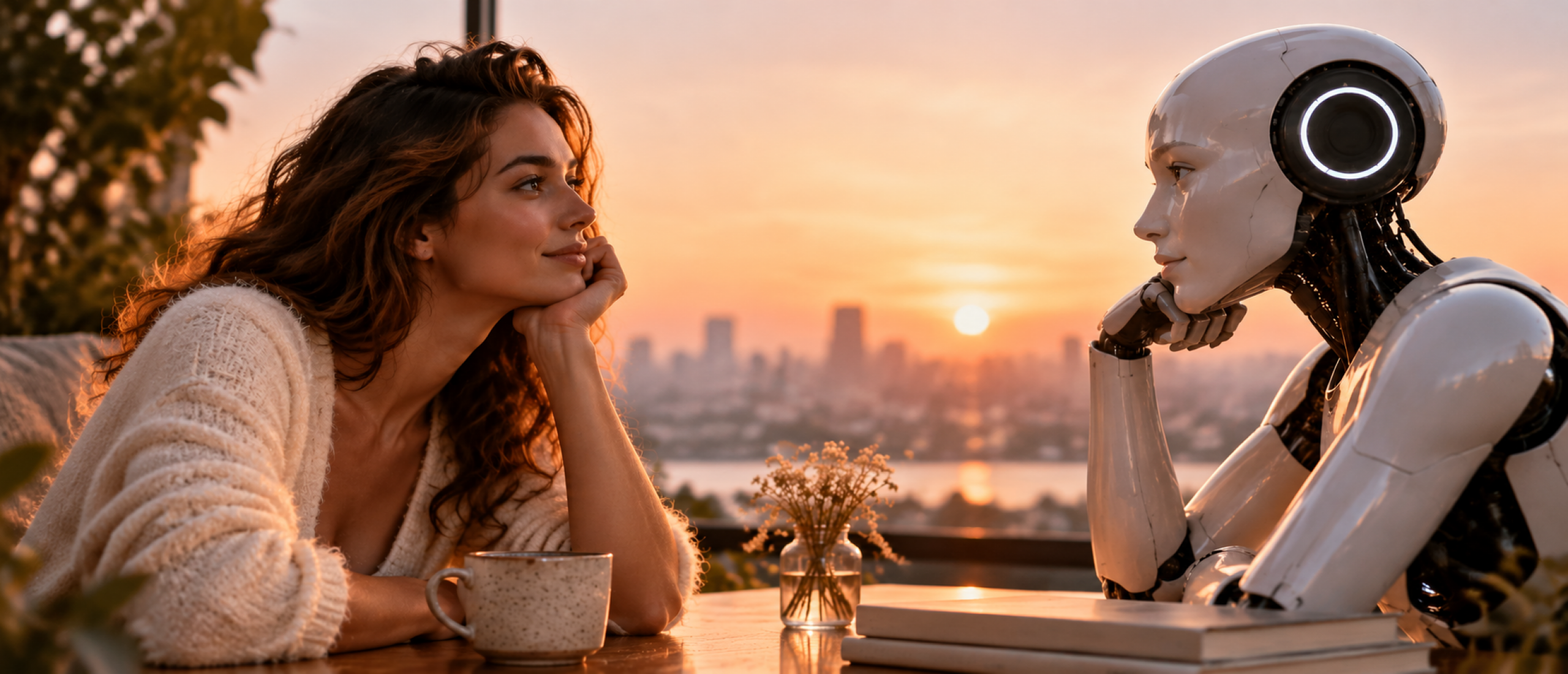
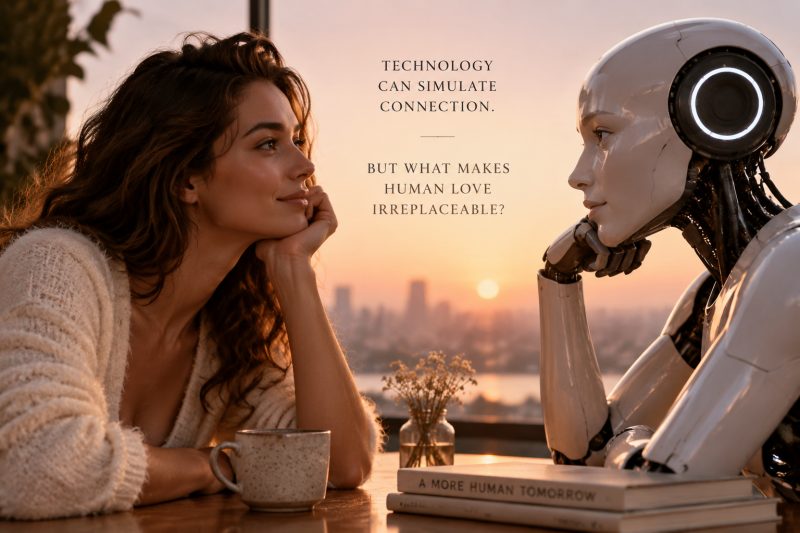
In a world where technology can simulate connection, what makes human love irreplaceable?
Something remarkable is happenig in the way we experience connection.
For thousands of years, human intimacy was built around physical presence. We met people through our communities, our families, our workplaces, our neighbourhoods and the places where life naturally happened. Then technology transformed dating. Suddenly, finding a potential partner became something we could do from our phones, with thousands of profiles available within seconds.
The promise was exciting: more choice, better matches and ultimately a better chance of finding love.
But now we have entered a completely new chapter.
Artificial intelligence is no longer only helping us find relationships. It is beginning to participate in them.
AI companions are becoming increasingly sophisticated. They can remember conversations, adapt to our personalities, respond with emotional sensitivity and provide a sense of availability that many people experience as comforting. For some users, these systems have become more than digital tools. They have become companions, confidants and, in some cases, something that feels very similar to a relationship.
This raises important questions about technology, psychology and the future of intimacy.
Are AI companions replacing human connection? Are they helping people who feel lonely? Are we creating a world where relationships become easier because they require less vulnerability?
Or is something deeper happening?
Perhaps the rise of AI companions is giving us an unexpected opportunity to understand what human beings are actually searching for when they long for love.
We don’t only want a partner. We want to feel seen.
When people talk about wanting a relationship, they rarely describe a perfect person on paper.
They talk about wanting someone who listens. Someone who remembers the small details. Someone who cares about their day. Someone who makes them feel accepted. Someone they can share their thoughts and emotions with.

At the heart of many relationship desires is a very human need:
I want to be seen.
And this is exactly why AI companions are such an interesting phenomenon.
They are becoming remarkably good at responding to this need.
Research published in Nature Human Behaviour examined more than 1,000 Character.AI users and thousands of conversations, exploring how AI companionship relates to psychological wellbeing. The researchers found that people with smaller offline social networks were more likely to use AI primarily for companionship, while also highlighting that the relationship between AI use, loneliness and wellbeing is complex.
Other research has shown that people can experience genuine feelings of closeness during emotionally engaging conversations with AI systems. In some studies, participants reported feeling a sense of interpersonal connection, demonstrating how powerful human responses to perceived understanding can be.
And perhaps that tells us something important. Humans are wired for connection. We respond to attention. We respond to being listened to. We respond to feeling understood. These are not artificial needs. They are deeply human.
But being understood is not the same as being loved
This is where the conversation becomes more interesting. Because while AI can simulate some aspects of intimacy, there is something fundamental that a human relationship offers that technology cannot fully reproduce.
Another human being is separate from you. They have their own emotions, their own history, their own desires and their own perspective.
They can surprise you.
They can disagree with you.
They can misunderstand you.
They can challenge you.
They can reveal parts of yourself that you did not know existed.
And that is one of the most powerful aspects of real relationships. A relationship is not only a place where we feel comfortable. It is also a place where we grow.
A person who truly loves us does not only reflect back what we want to see. They also mirror the places where we still have work to do.
They may show us where we avoid vulnerability. Where we struggle with trust. Where old wounds are still influencing our behavior. Where we need to communicate more honestly.
This does not mean relationships should be painful or that someone else should “fix” us. It means that another person can become a mirror. And sometimes that mirror is exactly where transformation begins.
The hidden lesson of AI: perhaps we are longing for safety
One reason AI companions are appealing is because they remove many of the risks that come with human relationships. There is no fear of rejection in the same way.
No uncertainty about where you stand.
No awkward first date.
No wondering whether someone will call.
No moment where you have to reveal yourself and wait to discover how the other person responds.
AI can create a feeling of emotional safety. And that is something many people deeply desire. But conscious relationships ask us a different question:
Can we create safety while still allowing ourselves to be vulnerable?
Because real intimacy requires both. We need enough safety to open our hearts. But we also need enough courage to step outside our comfort zone. Love is not only about avoiding pain. It is about becoming more alive.
Conscious dating is not about becoming perfect before you love
This is where personal development and conscious dating come together. More and more people are investing in understanding themselves. They explore therapy, meditation, attachment styles, nervous system regulation, spirituality, coaching and emotional growth.
That is a beautiful movement. Knowing yourself matters. Understanding your patterns matters. Taking responsibility for your own healing matters. But there is also a potential trap. Self-development can become another way of postponing life.
“I just need to heal a little more first.”
“I need to become completely secure before I start dating.”
“I need to become the best version of myself before someone can love me.”
But there is no final version of yourself waiting at the end of personal growth. You are not a project that needs to be completed before you are worthy of connection.
Relationships are also part of the healing journey.
You can read about attachment theory, but a relationship will show you how your attachment patterns actually appear. You can learn about boundaries, but eventually someone will challenge them. You can understand vulnerability intellectually, but eventually you have to let someone see you.
The goal of conscious dating is not to become perfectly healed. The goal is to become conscious enough to notice yourself while you are in connection.
To communicate. To reflect. To repair. To grow.
The future of dating may not be more technology, but more humanity
Interestingly, while AI is moving deeper into emotional spaces, dating platforms themselves are moving people back into the physical world. Tinder has expanded its Events feature, creating opportunities for singles to meet through activities rather than only through profiles and messages. This reflects a broader cultural shift.
People are not necessarily rejecting technology. They are looking for something technology cannot fully provide: presence.
The feeling of sitting across from someone and noticing their energy. The way someone laughs. The way they treat other people. The unexpected conversation that lasts much longer than planned. The feeling of meeting someone who you would never have chosen based only on a profile.
Because attraction is not simply information. Connection is an experience.
Perhaps AI is showing us what we need to protect
The rise of AI companions does not have to be a story about technology replacing humanity. It can also be a moment of reflection. AI is showing us how much people need attention. How much people need companionship. How much people need to feel valued How much loneliness exists in our modern world.
And perhaps that is exactly why real human connection becomes even more important.
The question is not: “Will AI replace love?”
The deeper question is:
What kind of love do we want to create in a world where imitation becomes easier?
Because love is not only about being understood. It is about being met. By someone who is real.
Someone who has their own inner world.
Someone who chooses you freely.
Someone who can grow alongside you.
Let Yourself Be Seen
This is why I started my Let Yourself Be Seen Offline campaign. Because in a world where we can increasingly create digital versions of ourselves, authenticity becomes more valuable than ever.

Being seen is not about presenting the perfect version of yourself. It is not about having healed every wound. It is not about becoming someone who is impossible to reject. Being seen means allowing another person to meet the real you.
Your curiosity.
Your humour.
Your vulnerability.
Your imperfections.
Your story.
Your becoming.
At Higher Love Society, we believe conscious dating starts with knowing yourself. Not because you need to be perfect before you love, but because self-awareness allows you to create healthier, deeper connections.
The journey is not:
Become perfect → find love.
The journey is:
Know yourself → heal and grow → let yourself be seen → connect consciously.
Love cannot be optimized
Perhaps that is the greatest lesson technology is giving us. We can optimize many things. We can optimize our schedules. Our health. Our productivity. Even parts of our dating experience. But love has always contained something that cannot be controlled.
The unexpected moment. The surprising person. The conversation that changes everything. The courage to show up. The vulnerability of allowing someone to truly know you. Technology can help us find each other. It can support us. It can teach us.
But it cannot do the most human part for us.
It cannot take the risk of loving. That remains ours. And perhaps that is exactly what makes it beautiful. Because love is not valuable because it is easy.
Love is valuable because it is real.

Sources
- Stanford / Nature Human Behaviour: Interaction with AI companions and psychological well-being (2026)
https://www.nature.com/articles/s41562-026-02516-2 - Nature Human Behaviour: research on emotional attachment and AI companions
- Research commentary: Emotional risks of AI companions demand attention (Nature Machine Intelligence)
- Tinder Events expansion and offline dating initiatives